News

Sociology Archive

Transfronterizo Talk: Conflicting Constructions of Bilingualism on the US-Mexico Border

Monday, October 12th, 2009

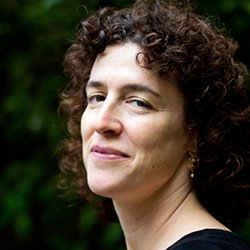
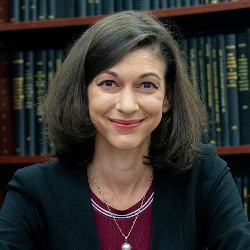
Ana Celia Zentella, Lang Visiting Professor of Social Change, is a recognized leader in building appreciation for language diversity and respect for language rights. Her research shows that fluency in Spanish and English is both a product and facilitator for students who spend years living and studying on both sides of the U.S.-Mexico border. It is also the most visible cultural marker of the identity of students who frequently travel between San Diego and Tijuana. Interviews in Spanish and English with eighty transfronterizo college students indicate that, despite their proficient bilingualism, many struggle with language and identity conflicts. The cultural and social obstacles transfronterizos encounter in ESL programs, including criticisms of their Spanish by Mexican citizens and feelings of shame about their Spanish-accented English may undermine their avowed commitment to Spanish. Her research has led her to advocate for educational and governmental language policies in the USA and Mexico that build on the principles of anthro-political linguistics.

 
 Lecture Audio [44:16m]: Download
 Lecture Notes: Download

Post-Election Reflection: Where Do We Go From Here?

Wednesday, November 19th, 2008

Now that the next U.S. President is known, what are some options for people who want major change in national policies both domestic and foreign, in the direction of justice, peace, and environmental sustainability?

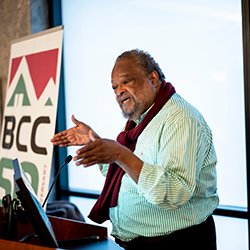
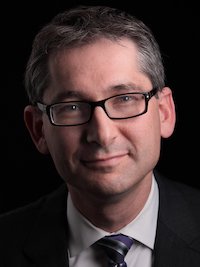
Visiting Lang Professor George Lakey presents a multi-dimensional strategic framework for change.  Based on research but guided by vision, the framework offers meaningful actions for the next four years for people with diverse gifts and backgrounds seeking unity of collective strength.

 
 Lecture Audio [57:28m]: Download
 Transcript (PDF): Download
 Strategic Model For Change: Five Developmental Stages (PDF): Download
 Preventing Poverty: Best Practices (PDF): Download
 Norway's Class Struggle (PDF): Download
 Cautionary Disclosures From Scholar/Policy-Makers (PDF): Download

Making Nonviolent Struggle More Powerful: Framing Strategies

Tuesday, August 7th, 2007

by Lang Visiting Professor of Issues for Social Change George Lakey

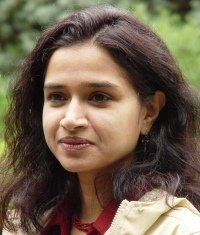
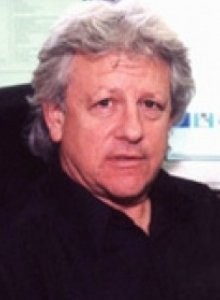
George Lakey"We live in a breakthrough period for 'nonviolent struggle,' when pro-democracy movements are using it to overthrow dictators and human rights advocates are using it to save lives during civil unrest," Lakey says. "My question is: how can this social technology be made even more powerful for achieving justice, democracy and peace?

"I argue that it's time to view nonviolent action not just as an overall concept but to break it into three different applications, and I'll argue further that these applications are different from each other in important ways. By 'nonviolent struggle' I mean an approach to waging conflict in which the protagonist uses methods of protest, intervention and/or noncooperation without the use or threat of injurious force. It's often called 'people power.' Researchers are struggling to keep up with the increased use of people power around the world, the better to understand it."

 
 Lecture Audio [67:59m]: Download
 Lecture Notes: Download

The Art of Surrender

Friday, January 6th, 2006

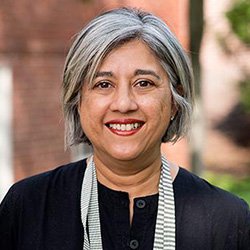
Robin Wagner-PacificiThis lecture draws from Robin Wagner-Pacifici's forthcoming book, The Art of Surrender: Decomposing Sovereignty at Conflict's End (University of Chicago, 2005), in which military surrenders are analyzed as transfers of power in warfare. The forms and substances of surrenders are presented as mechanisms for moving beyond the polarizations of conflict, ones that involve ceremonies, demonstrations, and material exchanges. The talk will present the case for the importance of scholarly attention being paid as much to losing as to winning.

 
 Lecture Audio [51:43m]: Download