This lecture asks us to question our normative view of the nation-state, and to imagine a world where ethnicity was neither a real nor an important form of community identity.
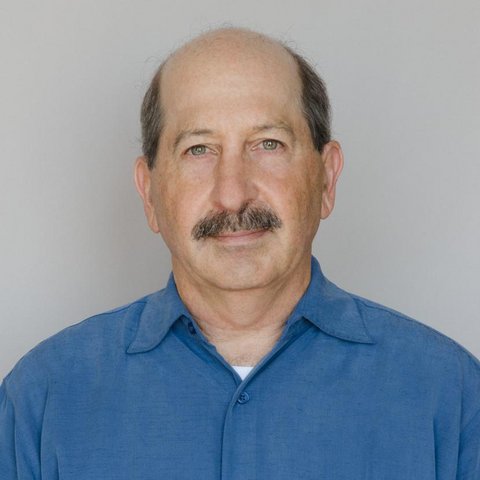
Pieter Judson '78 asks whether Austria-Hungary was truly an empire. He argues that how we answer this question shapes the way we view contemporary East-Central Europe. If, as most people do, we see the world through a nationalist lens, then we will categorize Austria-Hungary as a classic empire, one that ruled over several "captive nations." After the break up of Austria-Hungary in 1918, nationalist activists propagated just such a myth of Austria-Hungary as an imperial "prison of nations" in order to legitimize their new states of Czechoslovakia, Poland, and Yugoslavia. Twentieth-century social scientists too were invested in seeing Austria-Hungary as an imperial entity, one that had held together the complex ethnic mosaic they thought of as Eastern Europe. Finally, nostalgists pining for the lost world of fin-de-siècle Budapest, Prague, or Vienna also promoted memories of Austro-Hungarian culture as particularly imperial in nature. All these views, Judson argues, are wrong-headed, originating in our need, like that of the nationalists, to see Eastern Europe in terms of well-defined nations and cultures. Austria was in fact a genuinely constitutional state with no ruling nation and no oppressed minority nations, but also one with no national identity.
Professor of History Marjorie Murphy discusses teacher unions, politics and how the differences between these two parties caused the Ocean Hill-Brownsville strike of 1968. Martin Luther King, McGeorge Bundy, Sunny Carson, and Dick Parrish are the key figures that this lecture seeks to bring to the forefront as characters whose actions aided in shaking up New York in the late 1960's. Their roles, influences, and actions are laid out in a clear and concise manner so as to highlight the specific route that their actions took.
Professor Murphy also discusses why public school education in many American cities, is for minority parents, an intellectual, social, and economic death sentence for their children, and why Dewey’s ideal of ideological ground fell to the neo-conservatives while the progressive shattered into fragments after the Ocean Hill-Brownsville Strike.
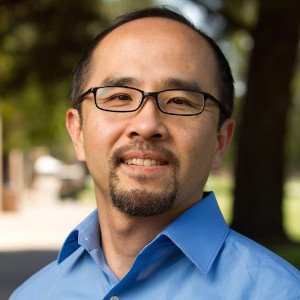
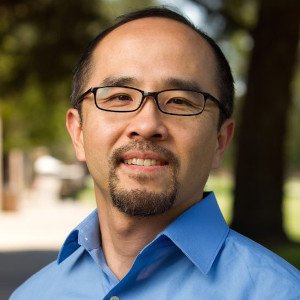
"From the perspective of a typical bacterium or virus, the human body is a perfect incubator: constant temperature, filled with nutrients, bathed in moisture! So why are we still around? How do bacteria sense the presence of a host's immune response? How can both the bacterium and host survive? We'll consider these topics from a co-evolutionary and inter-dependent point of view," Vollmer says. "As well, we will explore the concept that there are many beneficial bacterial commensalisms, upon whom our lives depend. My talk will provide an overview to the intertwined worlds of humans and microbes. It will also include examples of how microbiology is an ideal vehicle for promoting science literacy throughout the Swarthmore curriculum."
"Philosophers have traditionally classified mathematical knowledge as 'a priori' and scientific knowledge as 'a posteriori,'" Baler says. "In other words, mathematics can be done without leaving one's armchair, while physics cannot. In this lecture I challenge both sides of this traditional picture. On the one hand, are there such things as 'mathematical experiments' and what kind of role might they play in mathematics? On the other hand, can conclusions be justifiably reached about the nature of the physical world that do not depend on observation or experiment?"
The lecture is intended for a general audience and no specific mathematical or scientific background is presupposed.
by Assistant Professor of Japanese William Gardner
"In my lecture, I discuss the global context for the emergence of modernism in Japan in the 1920's and 1930's, as well as the ways in which Japanese modernist poetry deployed the distinctive qualities of the Japanese written language," Gardner says. "Although the prewar Japanese state could be characterized as both authoritarian and imperialist, the 1920's were a time of relative political liberalism and cosmopolitanism. This was also a period of rapid urban growth, as well as the rise of communications and transportation technologies such as radio, cinema, and aviation that seemed to shrink the size of the globe. Among the dizzying cultural developments of this period was the emergence of new types of literature in Japanese that we can identify as modernist and avant-garde, inspired in part by such European avant-garde movements as Futurism, Dadaism, and Surrealism. In my talk I will look at the work of four modernist poets, and show how each of them positions his work in terms of Japanese literary tradition, Western cultural hegemony, and Japan's expanding empire in East Asia."
"Twelve years after the first discovery of planets outside our own solar system, we now know of more than 200 extrasolar planets," Jensen says. "This is enough to allow us to start to see emerging patterns that may yield clues to how Jupiter-like planets form, though current techniques are not yet able to detect Earth-like planets. I discuss what we have learned so far from our study of extrasolar planets, and the prospects for detecting Earth-like planets in the near future."
by Associate Professor of Classics and Philosophy Grace Ledbetter
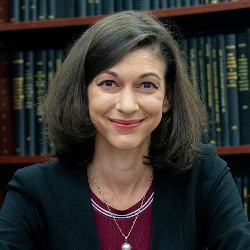
"Why does Greek mythology figure centrally into some of the most pivotally modern works in the performing arts? If we have lost a romantic, sentimental attachment to ancient Greece as a cultural ideal, what significance can Greek myth have for us?" asks Ledbetter. "In this lecture I discuss Strauss's Ariadne auf Naxos, Martha Graham's Night Journey, and Balanchine's Apollo and show that, in different ways, each of these works employs a kind of classicism that - somewhat paradoxically - evokes the ancient past specifically for purposes of modernizing its art form."
by Lang Visiting Professor of Issues for Social Change George Lakey
"We live in a breakthrough period for 'nonviolent struggle,' when pro-democracy movements are using it to overthrow dictators and human rights advocates are using it to save lives during civil unrest," Lakey says. "My question is: how can this social technology be made even more powerful for achieving justice, democracy and peace?
"I argue that it's time to view nonviolent action not just as an overall concept but to break it into three different applications, and I'll argue further that these applications are different from each other in important ways. By 'nonviolent struggle' I mean an approach to waging conflict in which the protagonist uses methods of protest, intervention and/or noncooperation without the use or threat of injurious force. It's often called 'people power.' Researchers are struggling to keep up with the increased use of people power around the world, the better to understand it."
"What is perception for? Here I argue that perceptual systems work very hard to improve the precision of perceptual discrimination — to the point that the metric accuracy of perception is often sacrificed in favor of precision," Durgin says. "This principle is illustrated by many illusions that reveal the way perceptual systems alter their coding spaces when they adapt to contingencies — such as those that exist in the multisensory array of visual, vestibular, kinesthetic and auditory information produced during walking. Because walking is so common, our perceptions are actually distorted during walking so as to make us more sensitive to the perceptual information that we can expect to receive as feedback. As a result, we are highly tuned to walk accurately but our conscious experiences of the individual sensory variables (e.g., optic flow speed) are often biased and inaccurate during walking."
by Alexander Griswold Cummins Professor of English Literature Philip Weinstein
"When and why does western fiction become difficult to read? My lecture takes on this question," Weinstein says. "Modernist writers of unknowing refuse to tell the West's favorite story: that of a hero or heroine moving through trouble and eventually coming to know. I explore how we in the West came to tell that favorite story, why we have cycled and recycled it for over two centuries. Then, around the turn of the last century, a group of thinkers and writers-Proust, Kafka, Faulkner, and Freud among them-worked to reshape our very sense of the human drama. They revised our most commonsensical ways of understanding ourselves in space and time and among others. The aim of the lecture is to explain why they are so difficult to read. No less important, I'll try to persuade my audience that their difficulty is invaluable."